
A personal essay by Daisy Polowetzky
No amount of guide books, Condé Nast Travel articles, or travel influencer TikToks can teach you how to truly live like a local when moving to a new city. In London at least, the best way to learn what it means to be a Londoner is through food. As a Syracuse University student studying abroad in London for the next few months, exploring pubs, markets, restaurants, and even grocery stores has helped me adjust to the unexpected cultural differences in England’s capital city.
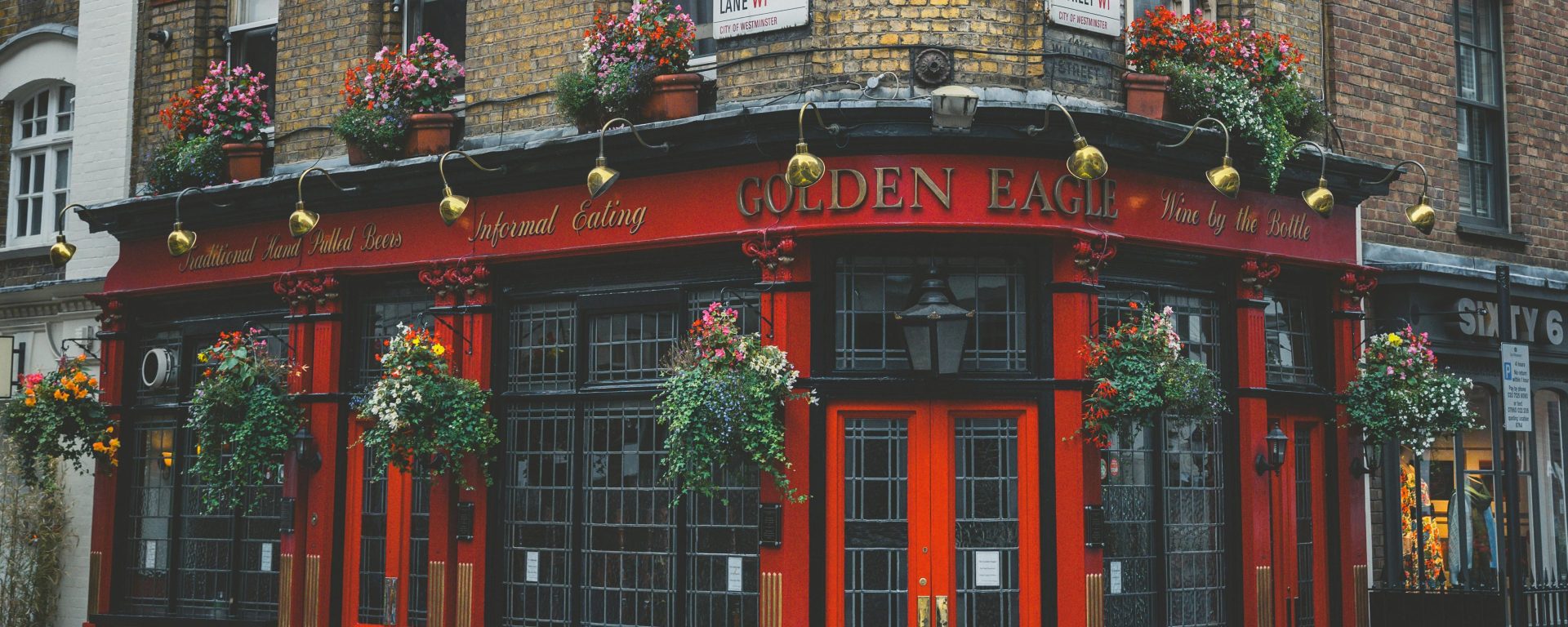
I am lucky enough to be living in Camden Town, a vibrant neighborhood known for its market, Regent’s Canal, and being the old stomping grounds of Amy Winehouse. After adjusting to the jet lag, one of the first things my roommates, our friends, and I did was explore Camden’s pubs. Since I cannot legally drink in the United States, the concept of the pub as a hangout spot was new to me. Pub culture on the other hand, is nothing new for Londoners and Brits.
In the afternoon, pubs are more laid-back, with people ordering lunch in between work on weekdays, while at night, exhausted commuters spill out of pubs onto sidewalks. Generally, though, pubs are pretty relaxed compared to the rest of London’s nightlife scene. A pub is not the place to get super rowdy, unless of course, your favorite football or rugby team is playing their rival. In terms of etiquette, you seat yourself and order a pint of whatever you want at the bar, and maybe even whip out a deck of cards if someone in your group remembered to bring some. Unlike a lot of bars in American cities like New York that can close way past midnight, most pubs will kick you out when the clock strikes twelve or 1 a.m.
The people are what really make the pub, though. My friends and I befriended the Irish bartender of our go-to Camden pub after he realized we could keep up with his sarcastic humor and general bluntness. We even attend his bi-weekly pub trivia nights (which we haven’t managed to win yet). For those scared of being associated with one of the many negative stereotypes of being an American abroad, all you have to do to feel welcome is approach every new situation with politeness and respect. As long as you’re not too loud in the pub, practice basic manners, and throw away any sense of entitlement, you too can become friends with your local bartender.
My friends and I have also tried many restaurants across London. After class one day, three of us had lunch at Italia Uno, a paninoteca, or sandwich bar, in Fitzrovia. We were drawn to the spot because of its cheap sandwich prices, and I knew the food would be delicious when the line was out the door upon arrival, with an older Italian man hand-slicing meat at the counter.
Unlike in the U.S., it is common for restaurants and cafes in London to have different prices for food depending on whether or not you are doing take-away, or dining in. It is cheaper to get your food to go, which I think reflects the fast-paced nature of the city, and the desperate need for restaurants to have quick table turnover. Still, even when I have dined in at restaurants and cafes, I have felt less pressure to eat as fast as humanly possible, and immediately pay for the check. At Italia Uno, my friends and I took our time eating our sandwiches, and leisurely went up to the counter to pay. The experience was a much-needed reminder to slow down, be present, and enjoy my new environment.
I still have much to learn when it comes to being a Londoner, but food has been a great place to start. The city’s food scene is much more than fish and chips–it is a melting pot of different cultures whose flavors tell the story of London’s unique and deeply complicated history.

 baked magazine